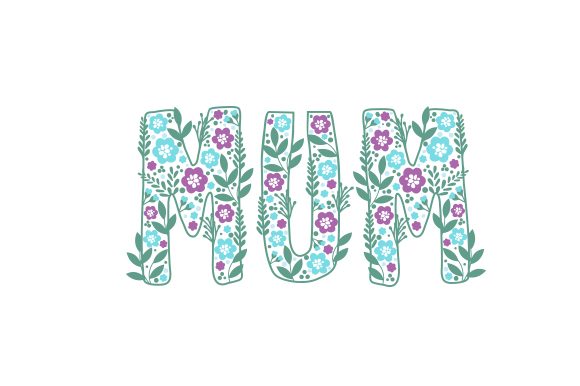
Floral Mum: A Thoughtful Embroidery Design for Real Projects
First Impressions: Soft, Seasonal, and Surprisingly Versatile
When I opened Floral mum, I wasn’t expecting to pause—but I did. It’s not flashy or oversized; instead, it carries a quiet, grounded elegance. The composition balances open space with delicate petal layers, suggesting movement without clutter. There’s no text, no cutesy script, no forced sentiment—just botanical warmth. That makes it instantly adaptable: not just for Mother’s Day cards or greeting prints, but as a machine embroidery design that holds its own on fabric. I immediately pictured it stitched onto a linen tea towel—soft edges, breathable texture, subtle sheen—and knew it would read as handmade, not mass-produced.
A Real-World Test: Embroidering It on a Cotton-Linen Blend Tote Bag
Last week, I used Floral mum for a custom tote bag order—a small-batch request from a local boutique owner who stocks handmade kitchen goods. She wanted something gentle but distinctive: no florals that screamed “grandma’s attic,” nothing too modern or minimal. Floral mum landed right in that sweet spot. Stitched with matte cotton thread on medium-weight cotton-linen, the design retained clarity in the outer petals while the center stayed rich and dimensional—not flat, not muddy. The stitch density felt balanced: enough fill stitch to anchor the shape, but open enough to avoid stiffness or puckering. No excessive satin stitch runs meant fewer thread breaks on my mid-range commercial machine, and zero re-hooping was needed.
Where It Shines (and Where It Asks for Care)
Floral mum performs especially well on stable, medium-to-heavy fabrics: sweatshirt fleece, canvas aprons, pillow covers, and structured baby blankets. On those surfaces, its organic flow reads as intentional—not accidental. It also translates beautifully into an embroidered patch when backed with tear-away stabilizer and finished with a clean merrow edge.
But here’s where attention matters: on thin or stretchy fabrics like lightweight knits or rayon challis, the outermost petal curves can blur unless you use cut-away stabilizer and reduce top tension slightly. And on dark fabric? Don’t assume contrast—test your thread colors first. A warm taupe or soft sage works better than stark white for depth and dimension. Also, avoid placing Floral mum near tight seams or curved areas like cap crowns unless you’re confident in your hooping technique; the asymmetry of the bloom means corners need breathing room.
Design Integrity Meets Customer Trust
As someone who sells digital embroidery files and custom-embroidered goods, I pay close attention to how a design affects perceived value. Floral mum elevates a simple tote or tea towel into a personalized gift—not because it’s complicated, but because it feels considered. Customers notice that. They comment on the “real flower” look, the way light catches the layered stitches, how it doesn’t compete with the fabric but complements it. That builds trust: when buyers see consistent, clean stitching across your Etsy listings or craft fair table, they associate your brand with care—not just speed or volume.
For small shop owners and apparel decorators, this is more than aesthetics—it’s reliability. Floral mum doesn’t require heavy digitizing tweaks before use. Its layout avoids tiny interior details that vanish at 3" width, and there’s no fragile stem line that snaps under dense stitching. That saves time on test runs and reduces customer returns due to legibility issues.
Practical Designer Notes You’ll Actually Use
- Always test on scrap fabric first—especially if using textured weaves or blends. Linen slubs can catch delicate satin stitch edges.
- Review stitch density in your embroidery software. If you plan to scale Floral mum down below 2.5", check whether inner petal definition holds—or if running stitch outlines need reinforcing.
- Confirm hoop size compatibility. This isn’t a tiny motif—it needs breathing room. I recommend a minimum 4"x4" hoop for best clarity.
- Inspect small details at actual stitch size. Zoom in on the calyx and petal tips: are they cleanly digitized, or do they feather unpredictably?
- Test black-and-white mockups before finalizing product photos. Some floral designs lose shape in grayscale—Floral mum holds up well, but verify.
- Compare light and dark backgrounds. Try stitching it in ecru on navy twill and charcoal on oatmeal canvas—you’ll quickly see which thread palette supports longevity.
- Use proper stabilizer for your base fabric. Cut-away for knits, tear-away for stable wovens, and fusible for lightweight linens.
- Check licensing before selling finished items or digital products. Since Floral mum comes with SVG, Transparent PNG, EPS, and DXF files, confirm whether commercial use is included—especially if you’re bundling it into craft kits or printable mockups.
Beyond Mother’s Day: A Craft Business Staple
Yes, Floral mum fits naturally in the Mother’s Day category—but reducing it to that misses its range. I’ve used it for nursery decor (stitched on organic cotton swaddle wraps), wedding favors (embroidered on muslin sachets), and even small-batch boutique branding (as a subtle chest logo on unisex crewnecks). Its Crafts roots show in its flexibility: it works as an applique design, a standalone fill-stitch motif, or even a base layer for hand-embroidered accents.
For Etsy sellers and creative entrepreneurs, that versatility means one design can support multiple product lines—no need to overstock or over-digitize. It pairs effortlessly with neutral palettes and natural materials, aligning with current buyer preferences for authenticity over polish.
Final Thought: Design That Serves the Maker First
Floral mum doesn’t shout. It doesn’t try to be everything. But it does what thoughtful design should: it gives you room to execute well, invites repeat use, and quietly strengthens your handmade product’s voice. Whether you’re stitching it for a client’s custom sweatshirt, prepping a batch of holiday embroidery kits, or building a cohesive line of small shop merchandise, it behaves predictably—and that’s rare. In a landscape full of overly dense, trend-chasing motifs, Floral mum is a reminder that restraint, balance, and botanical honesty still resonate. And that’s worth stitching again and again.