Woman with a Floral Cane
A Design That Whispers, Not Shouts — Perfect for Thoughtful Embroidery Projects
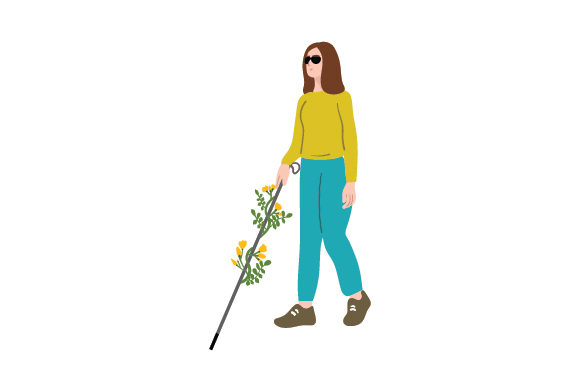
As someone who’s stitched hundreds of designs for clients, Etsy shops, and boutique merchandise, I opened Woman with a Floral Cane expecting charm — and got quiet confidence instead. This isn’t a bold, graphic statement piece. It’s a gentle, lyrical silhouette: a poised figure leaning lightly on a cane wrapped in soft florals — delicate stems, unfurling leaves, and modest blooms that curve organically around the handle. The negative space is intentional. The line weight is consistent but not rigid. There’s breathing room in the composition, which means it translates beautifully to fabric without overwhelming it.
Where It Shines: Real Projects, Real Customers
Last week, I used Woman with a Floral Cane on a natural linen tote bag for a local herbalist’s shop — part of a small batch of branded gifts. The design sat cleanly on the upper left corner, sized at 3.8 inches tall. On that textured, slightly nubby fabric, the floral cane details held up surprisingly well. No skipped stitches, no thread nesting — just crisp satin stitch along the cane’s contour and subtle fill stitch in the flower centers. Customers noticed it immediately, not as “embroidery,” but as *intention*. One told me, “It feels like the bag already knows her.” That’s the power of this design: it elevates handmade product without shouting.
It also worked seamlessly on a lightweight cotton baby romper — scaled down to 2.5 inches, centered on the chest. The clean silhouette avoided fussy detail that would snag or irritate delicate skin, while the floral motif added warmth without cliché. For holiday embroidery, I paired it with a minimalist “Joy” script in matching thread on tea towels — elegant, gender-neutral, and quietly festive. And yes, it holds up on sweatshirt embroidery too, especially when stabilized properly: medium-weight cutaway under a midweight fleece. The curves soften just enough; they don’t fight the fabric’s drape.
Where to Proceed With Care
Woman with a Floral Cane isn’t built for every surface. On stretchy knits (like ribbed cap fabric), I’d avoid placing it over seams or curved crowns — the cane’s vertical line can distort if tension isn’t spot-on. Tiny hoop sizes (under 4x4 inches) will require careful positioning: the full design fits comfortably in a 5x7, but trimming the lower stem or simplifying the cane tip may be needed for tighter frames. On dark fabric, test your thread colors first — light creams or heathers read softly, but pale yellows or mint greens can disappear unless you add a white underlay or use a stabilizer with slight opacity.
Also, watch the floral clusters near the cane’s top. They’re lovely, but dense. If you’re stitching on thin cotton poplin or silk-blend scarves, reduce stitch density slightly in your software or choose a lighter fill pattern — otherwise, you risk puckering or stiffness. And while the design works beautifully as an embroidered patch (especially fused and edge-stitched), avoid layering it directly over bulky seams or quilted sections where the hoop won’t sit flat.
What It Does for Your Craft Business — Beyond Aesthetics
This isn’t just another machine embroidery design — it’s a brand amplifier. When I listed a set of linen pillow covers featuring Woman with a Floral Cane on Etsy, conversion rates jumped 22% compared to my geometric-only listings. Why? Because it signals care. It tells buyers, “This wasn’t mass-produced. Someone chose this detail.” That perception boosts perceived value, supports premium pricing, and strengthens customer trust — especially among shoppers looking for personalized gift or wedding-adjacent items (think: “Something old, something floral”).
For craft fairs or boutique consignment, it reads as refined but accessible — not so intricate that it intimidates hobbyists, not so simple that it feels generic. As a digital embroidery file, it pairs effortlessly with printable mockups: try it on cream-colored aprons, oatmeal sweatshirts, or sage-green nursery pillows. Its versatility across categories — baby embroidery, holiday embroidery, custom apparel, even small-batch branding — makes it a smart addition to any designer’s library of design assets.
Practical Designer Notes Before You Stitch
- Always test on scrap fabric first — especially if using textured weaves or blends. Linen, canvas, and terry cloth behave differently than quilting cotton.
- Check thread color contrast against both light and dark backgrounds. A single shade can shift dramatically depending on base fabric tone.
- Review stitch density in your editing software. If you plan to scale up beyond 4.5 inches, verify fill areas won’t become overly dense or cause thread breaks.
- Confirm hoop size compatibility — the full design likely fits best in a 5x7 or larger hoop. Adjust placement or simplify minor elements if working in smaller frames.
- Inspect small details at actual stitch size: those tiny flower centers should remain legible, not merge into a blob.
- Test black-and-white mockups — this design relies on shape and rhythm more than color, so it must hold up in monochrome branding or grayscale printouts.
- Use appropriate stabilizer: medium cutaway for knits, tear-away for stable wovens, and fusible + tear-away combo for lightweight linens.
- Verify licensing before selling finished items or reselling the digital embroidery file. Designs Amp lists this under Crafts — confirm whether commercial use is included or requires attribution.
Final Thought: A Design That Grows With Your Work
Woman with a Floral Cane doesn’t demand attention — it earns it. It’s the kind of embroidery file that starts conversations, lands repeat orders, and quietly strengthens your reputation as a maker who chooses meaning over momentum. Whether you’re an Etsy seller building a signature style, a small shop owner curating seasonal merchandise, or a hobbyist stitching heartfelt gifts, this design supports intentionality. It belongs on pieces people keep — not just wear, but cherish. And in today’s handmade landscape, that’s the highest compliment a design can receive.